How to select a manufacturing partner in Vietnam
What to look for in a Vietnam EMS partner
By Tony Sui, VP of Manufacturing, Ryder Industries.
- Vietnam has become a major hub for electronics manufacturing
- What OEMs should look for when choosing a Vietnam manufacturing partner, including heritage, engineering, ethics and systems
- How Ryder Industries’ Vietnam facility meets these criteria, including RBA Silver recognition and an MES identical to its China sites
As global supply chains become more complex, businesses are increasingly expanding their manufacturing capacity beyond traditional borders to strengthen resilience and mitigate geopolitical risks. Vietnam has emerged as a premier destination for electronics manufacturing, offering a skilled workforce, reliable infrastructure and a dynamic electronics ecosystem.
How should companies select a manufacturing partner in Vietnam?
Companies selecting a manufacturing partner in Vietnam must evaluate its operational stability, stringent quality control, ethical transparency and ability to seamlessly integrate with their own standards. For Original Equipment Manufacturers (OEMs) and global brands, this requires a comprehensive evaluation that extends far beyond basic production capacity.
Key factors for a successful EMS (Electronic Manufacturing Services) partnership include:
- Proven heritage: The partner must possess a mature supply chain network and a proven heritage in precision manufacturing.
- Comprehensive engineering services: The manufacturer should offer a comprehensive range of services, from Design for Excellence (DFX) to rapid prototyping to reduce development lead times and minimise risk.
- Vertical integration: The ability to provide a “one-stop shop” that manages from Printed Circuit Board Assembly (PCBA) and plastic injection moulding to final product assembly under one roof significantly reduces operational complexity.
- International standards and frameworks: The EMS partner holds rigorous, globally recognised system management certifications and actively participates in internationally recognised social responsibility frameworks. This integrated approach ensures the facility operates to high standards of quality, product safety and ethical conduct.
- A values-led culture: Integrity and ethics in all dealings, innovation as the motor of the business, fair-minded partnership across the supply chain, and respect for the dignity and contribution of every individual.
Why does responsible business reliance (RBA) matter to the selection process?
The RBA provides independent, objective proof that a manufacturer acts with full integrity in business ethics and management systems. Also in labour practices, health & safety, and the environment.
Regulators and consumers are scrutinising global supply chains more closely than ever. To protect your firm’s compliance record, it is essential to partner with an RBA-audited manufacturer.
This recognition ensures alignment with global Corporate Social Responsibility (CSR) expectations by demonstrating that the supplier actively implements responsible manufacturing through the comprehensive Validated Assessment Program (VAP).
How Ryder Industries Meets Vietnam EMS Standards?
Ryder Industries’ commitment to Vietnam EMS standards is evidenced by its RBA Silver recognition, achieved by its Vietnam facility in May 2026 following a successful VAP audit. Now all three of Ryder’s manufacturing sites – beginning with Shenzhen and Xinfeng in China – have passed RBA audits, consistent commitment to responsible manufacturing across Asia.
For customers, Ryder’s RBA Silver accreditation guarantees several operational and ethical benefits:
- Strict protection of customer IP: Robust systems safeguard proprietary technologies and data, ensuring total respect for intellectual property.
- Robust anti-corruption policies: The facility maintains the highest standards of business ethics and integrity in all commercial dealings and operational activities.
- Responsible supply chain management: Ryder actively monitors and manages its own suppliers to ensure ethical practices bubble -up the supply chain.
- Ethical labour standards: The facility maintains safe, hazard-controlled working conditions and treats employees with the dignity outlined in Ryder’s “Respect for People” culture.
The Value of Ryder’s Presence in Vietnam
Beyond ethical accreditation, Ryder Industries offers a highly scalable and technologically advanced manufacturing footprint in Vietnam, built in two major phases.
| Feature | Phase 1 | Phase 2 |
| Status | Operational (Contributed 20% of overall business) | First shipments in Summer 2027 |
| Location | South Vietnam | South Vietnam |
| Size | 15,000 square metres (160,000 sq.ft.) | 39,000 square metres of floor space across four buildings (420,000 sq.ft.)3,300 square metres of green space; 6,000 square metres of rooftop solar photovoltaics (1.0MW capacity) |
| Certifications | ISO 13485, ISO 9001 and ISO 14001 | Plan for ISO 13485, ISO 9001 and ISO 14001 |
Consistent Manufacturing Execution System (MES)
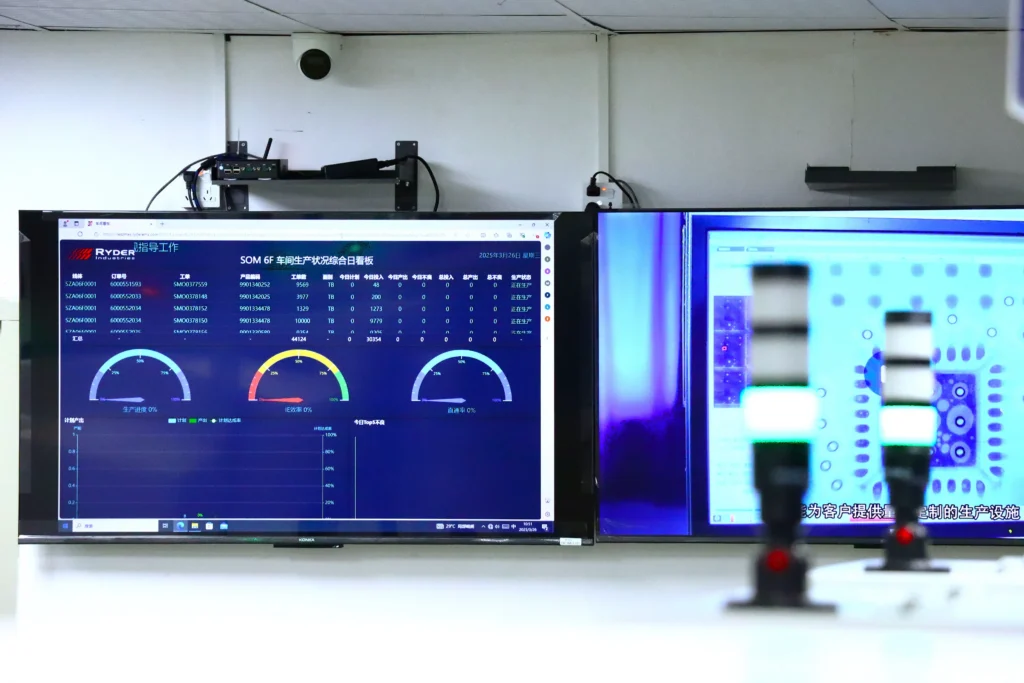
Ryder ensures complete operational consistency between its Chinese and Vietnamese facilities by deploying an identical MES. This provides real-time visibility, automated testing data uploads and absolute traceability for every product manufactured.
Ryder Industries provides a unique capability for organisations seeking manufacturing in Vietnam. By combining vertical integration, extensive engineering support, identical central systems and the ethical assurance of RBA Silver recognition, Ryder offers a resilient, high-quality supply chain solution that customers can trust to scale production and accelerate time to market.
Considering manufacturing in Vietnam? Find out more about Ryder’s Manufacturing Execution System here, https://www.ryderems.com/quality/manufacturing-execution-system-mes/
FAQs
- What certifications should an electronics manufacturer in Vietnam have?
There is no single certification that suits every product. Check for quality, environmental and sector-specific certifications relevant to the site and your market, and verify the scope and validity. For example, ISO 9001 relates to quality management, while regulated medical products may require additional standards and controls.
- How can a company protect its IP when outsourcing manufacturing?
Use contracts that define ownership, confidentiality, access and permitted use of designs, firmware, data, tooling and test documentation. Also assess the manufacturer’s physical and digital security controls, access permissions, employee practices and supplier controls. IP protection should be treated as an operational system, not only a contract clause.
- Is moving production to Vietnam enough to make a supply chain resilient?
Not by itself. Resilience depends on supplier depth, material availability, logistics, process maturity, capacity, quality and the ability to transfer production without disruption. A second location can reduce concentration risk, but companies should verify that it is qualified, operationally ready and supported by consistent systems.