The Minds Behind the Machine
Inside Ryder Industries’ R&D engineering team
By Wilson Chan, Vice President of Engineering
- Ryder Industries’ research and development (R&D) team brings together electronics, mechanical engineering, firmware and design quality assurance to turn product concepts into production-ready designs.
- Rapid prototyping, in-house EMC pre-compliance testing and cross-functional engineering help identify design issues early and reduce development risk.
- By combining engineering expertise with in-house moulding and electronics assembly, Ryder supports OEMs from initial design through validation and mass production.
The human element of manufacturing
In the era of automated manufacturing and artificial intelligence(AI), it is easy to focus solely on machinery. We often measure success in cycle times, mil precision and robotic efficiency. However, at Ryder Industries, we understand that consistently achieving quality and precision relies on much more than just the hardware on the factory floor. It also requires intellectual capital to direct it.
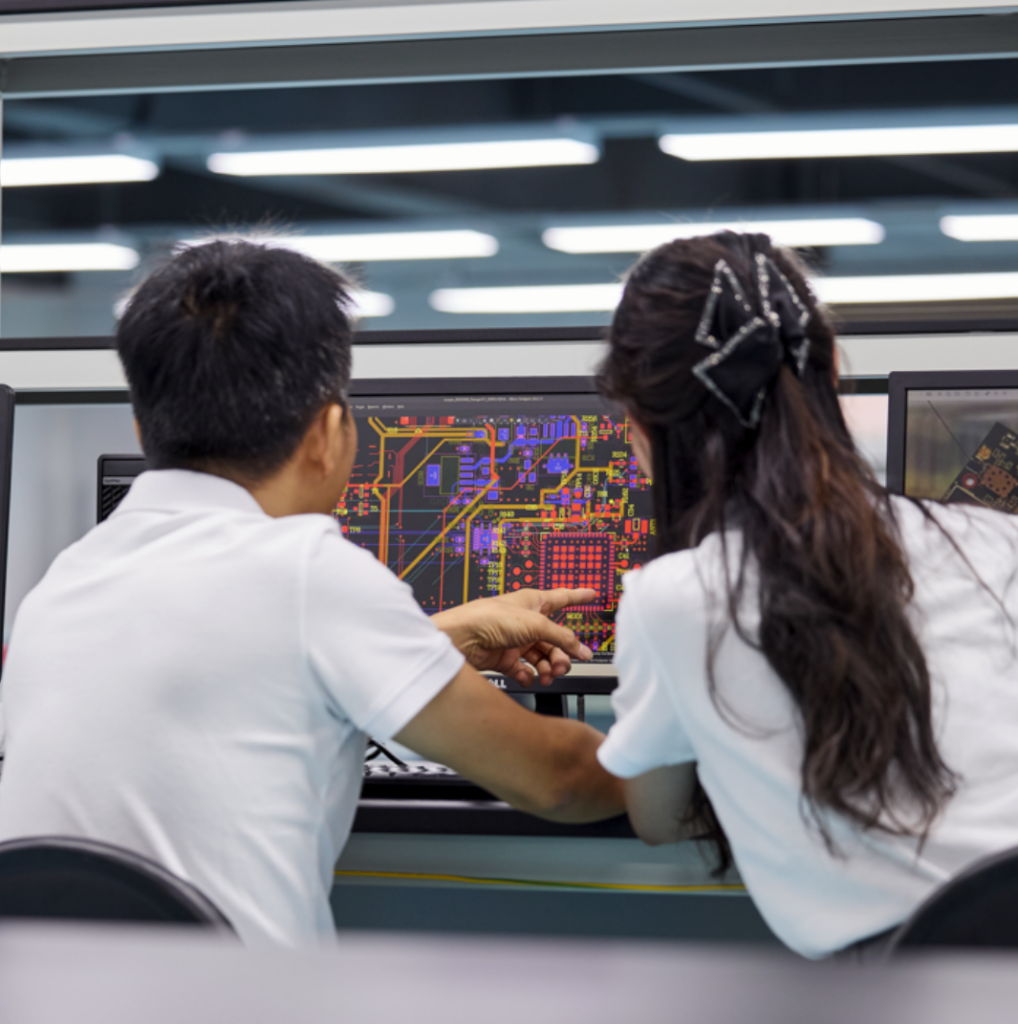
On this World Engineering Day, we are pulling back the curtain on the almost 50 R&D engineers who create value within our operations. From firmware debugging to mechanical stress testing, this team bridges the gap between a conceptual design and a mass-producible reality.
In this article, I want to explain more about how Ryder’s engineering culture – built on systematic project management, vertical integration and continuous learning – solves the complex challenges of modern electronics manufacturing.
The structure of expertise: Beyond the assembly line
To understand Ryder’s capability, one must first look at the structure of our team. We view engineering as a system architecture. Our R&D department comprises specialists in electronics, mechanical engineering, firmware development and design quality assurance (DQA).
This coverage is critical. In the modern manufacturing environment, a product is more than just a drawing. It is often a complex integration of components with designed functions in real life – for example radio frequency (RF) connectivity, precision-moulded plastics and sophisticated software. By drawing on these disciplines in one team, we ensure that any design change is immediately evaluated for its cross-disciplinary impact. For instance, modifying a mechanical housing triggers an automatic review of its effects on electronic performance and thermal management.
Our distinctive competence lies not just in executing instructions, but in an “innovative mentality,” supported by skilful design capabilities. We do not simply build what is asked; we interrogate the design to ensure it is robust, scalable and cost-efficient.
Navigating the New Product Introduction (NPI) process
The transition from a prototype to mass production, what we describe as NPI, is essential for electronics projects and managing the product life cycle. It is here that Ryder’s engineering ethos plays its most vital role.
Our engineers engage in daily communication with customers and conduct regular video conferences to align on technical nuances to ensure successful NPI.
A specific challenge our engineers solve daily is firmware debugging and design improvement. Once a prototype is built, our engineers perform rigorous functional and reliability tests to ensure the design fulfils the customer’s absolute product specification requirements.
This aligns with our broader strategic investment in rapid prototyping. As noted in our 2025 Chair Lookback, we have integrated Swiss high-tech SMT that precision-jets solder paste, eliminating the need for stencils and allowing us to iterate designs with exceptional same-day speed.
Solving real-world problems: The battle against interference
Manufacturing is rarely without its hurdles. One of the most common technical challenges in modern electronics is dealing with Electromagnetic Compliance (EMC) and Electrostatic Discharge (ESD) issues.
As devices become smaller and more connected, incorporating Bluetooth, Wi-Fi 7, and Thread protocols, the risk of signal interference grows.
Our EMC testing ensures full compliance with EN 55032/EN 55035 and FCC Part 15B. Using advanced tools like a Rohde & Schwarz ESL3 receiver, shielded chamber, and ESD room, we provide precise pre-scans and debugging for early issue detection and lower certification risk. We do not need to wait for a third-party mechanical vendor to approve a housing change; our mechanical and electronics engineers sit on the same team.
Vertical integration: The harmony of discipline
The true test of an Electronic Manufacturing Services (EMS) partner is how well they manage the intersection of different manufacturing disciplines. Ryder offers mechanical engineering, plastic injection moulding and electronic assembly in-house.
To prevent issues from reaching the production line, we utilise a “gate” system. After each sample stage is complete, we convene a critical approval meeting. This gathering brings together design engineers, NPI engineers and production engineers to review test results collectively.
This ensures that a product is not just “technically possible” to build, but that it is qualified for mass production. It prevents the scenario where a design works in the lab but fails on the assembly line due to manufacturing tolerances. As our Chairman Eric Winkler has noted, this collaborative approach is rooted in our culture: “We learn together, and so we can decide together”.
The future of engineering: AI, automation and talent
Looking ahead, the role of the engineer is evolving. We see AI and robotics not as replacements for human insight, but as tools that enhance efficiency.
Our engineers report that analytical software tools are saving them significant time in product development. By automating routine data analysis and test protocols, our team can spend more time on high-value activities: brainstorming and defining technology roadmaps for our customers. The evolution of robotics is driving us toward more “human-free operations” for repetitive tasks, which will allow our human talent to focus more of their efforts on innovation.
However, technology also requires skilled operators. Ryder places a heavy emphasis on talent development, offering both internal and external training to ensure our team stays ahead of the curve. We encourage a culture where long-standing engineers mentor newer talent, and where diverse backgrounds are viewed as a strength. By collecting different comments from engineers with varying experiences, and listening respectfully, our collective engineering capability is greater than the sum of its parts.
Strategic goals: 2026 and beyond
As we look toward the next five years, our engineering goals are ambitious. We are continuing to deepen our capabilities in RF connectivity, Robotics and Digital Signal Processing (DSP).
Furthermore, sustainability is becoming a core engineering challenge. Our team is actively exploring sustainable materials and processes, aligning with our facility investments in energy efficiency, solar power and rainwater harvesting.
At Ryder Industries, engineering is not just a department; it is the engine within our business. It is the discipline that ensures our customers can launch their products with confidence, knowing that every solder joint, every line of code and every moulded part has been validated by a team of experts dedicated to precision.
Looking for an engineering partner from concept through mass production? Find out more here, https://www.ryderems.com/electronics-engineering-services/
FAQs
- What is the difference between R&D and NPI?
Research and development focuses on creating, evaluating and improving a product or technology. New Product Introduction translates a design into a controlled manufacturing process, coordinating validation, tooling, work instructions, testing and production readiness. The two functions need to collaborate closely so the product can move from prototype to repeatable manufacture.
- Why should EMC testing start before certification?
Early EMC pre-scans can help identify emissions or immunity issues while design changes are still manageable. Engineers can investigate layout, cabling, shielding, grounding or enclosure effects before formal testing. Pre-compliance testing does not guarantee certification, but it can reduce the likelihood of costly late-stage redesign and repeat test cycles.
- What does design for manufacturability mean?
Design for manufacturability means considering production methods, tolerances, assembly, inspection, material choices and cost while a product is being designed. It helps teams identify features that are difficult or expensive to manufacture and improve them before tooling or production commitments are made. The exact checks depend on the product and manufacturing process.